
 Proudly Canadian
CAD$74.99
This product is intended for laboratory and research use only. Not for human consumption or veterinary use.
36 in stock
Choose your payment method at checkout: credit card or Interac e-Transfer.
Pay instantly by card, or send an e-Transfer to support@bioperform.ca and save 3%.
Orders before 2PM MST ship same day. Tracking number included.
Email support@bioperform.ca. Always a real response.
BPC-157, short for Body Protection Compound-157, is one of the most recognized research peptides in regenerative biology and tissue repair studies. Derived from a naturally occurring protein sequence, BPC-157 has been extensively investigated for its involvement in healing pathways, connective tissue recovery, gastrointestinal integrity, and cellular regeneration.
Researchers continue to study BPC-157 because of its broad range of applications across multiple biological systems. From tendon and ligament models to gut mucosal research and angiogenesis studies, the peptide remains a valuable tool for exploring how the body responds to injury, stress, and tissue repair. Its exceptional stability and diverse research profile have made it one of the most sought-after compounds in peptide science.
One of the primary areas of BPC-157 research involves angiogenesis, the process of forming new blood vessels. Healthy blood vessel development is essential for delivering oxygen and nutrients to tissues, particularly during recovery and regeneration. Researchers investigate BPC-157’s role in supporting these pathways to better understand how biological systems repair damaged structures and maintain tissue health.
BPC-157 is widely known for its applications in gastrointestinal research. Studies frequently focus on intestinal lining integrity, mucosal barrier function, and digestive tissue maintenance. Because the peptide remains highly stable in gastric environments, it has become a preferred compound for researchers examining gut-related biological processes and tissue recovery mechanisms.
The peptide is commonly investigated in tendon, ligament, muscle, and connective tissue models. Research suggests that BPC-157 may influence fibroblast activity and extracellular matrix remodeling, both of which are important components of tissue repair. These characteristics make it a popular choice for scientists studying structural tissue regeneration and recovery pathways.
Interest in the connection between the digestive system and the nervous system continues to grow. BPC-157 has attracted attention for its potential involvement in neuro-enteric signaling pathways, often referred to as the brain-gut axis. Researchers explore these mechanisms to better understand how cellular communication influences inflammation, tissue function, and biological balance.
Beyond individual tissues and organs, BPC-157 is frequently studied for its broader role in cellular recovery and regenerative signaling. Scientists use laboratory models to investigate how the peptide interacts with biological pathways associated with adaptation, maintenance, and repair. This versatility contributes to its widespread use in regenerative research programs.
BPC-157 is one of the most researched peptides in studies focused on tissue healing and regeneration. Its involvement in multiple recovery-related pathways makes it a valuable compound for understanding how damaged tissues respond and adapt during repair processes.
Researchers commonly use BPC-157 in models involving tendons, ligaments, and connective tissues. These studies help expand scientific understanding of structural tissue biology and recovery mechanisms.
The peptide’s strong association with digestive system research has made it a cornerstone compound in studies involving intestinal tissues, mucosal barriers, and gastrointestinal integrity.
Unlike many peptides that degrade rapidly under challenging conditions, BPC-157 demonstrates exceptional stability. This characteristic allows researchers to work with the compound effectively in a variety of laboratory and preclinical settings.
BPC-157 is frequently researched alongside TB-500 due to their complementary biological profiles. While BPC-157 is often associated with angiogenesis and gastrointestinal pathways, TB-500 is commonly investigated for cellular migration and tissue regeneration. Together, they form one of the most widely studied peptide combinations in regenerative science.
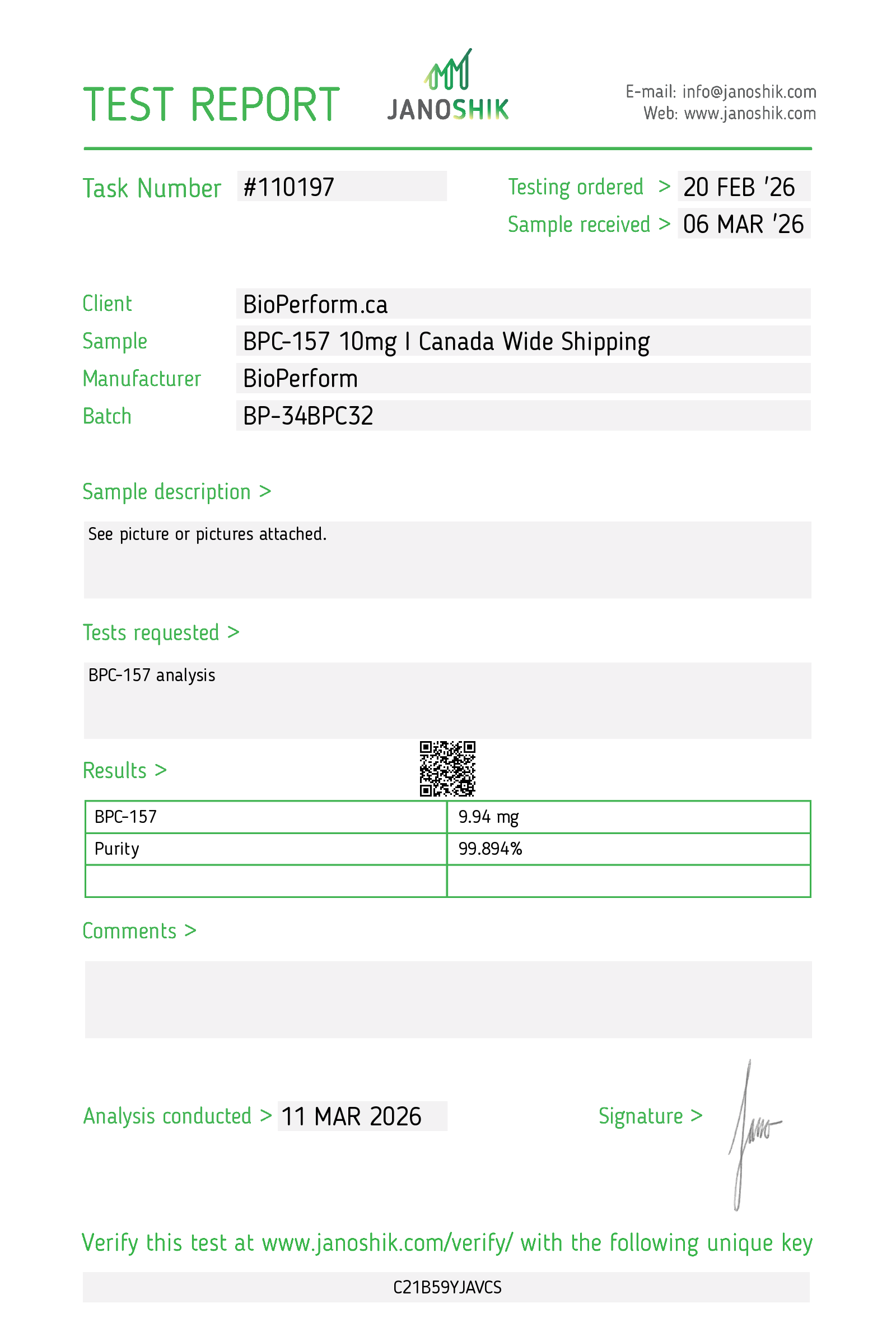
BPC-157 10mg is commonly used in laboratory and preclinical studies focused on regenerative biology, tissue repair mechanisms, gastrointestinal health, and cellular recovery pathways.
BPC-157 is most commonly studied alongside TB-500 when researchers seek to investigate complementary tissue repair and regeneration pathways.
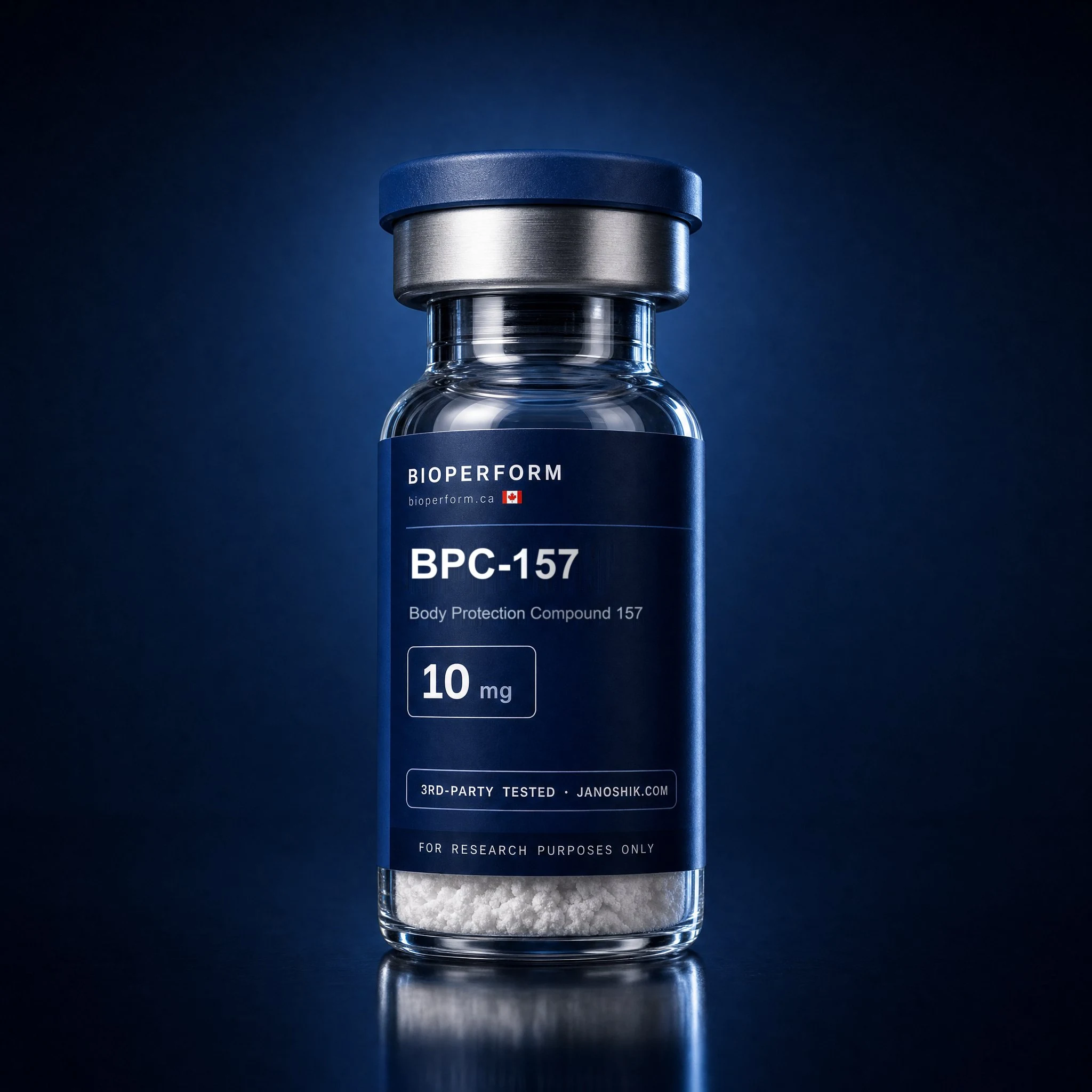
BPC-157 10mg is a synthetic research peptide derived from a naturally occurring protective protein sequence. It is widely studied in regenerative biology, tissue repair, angiogenesis, and gastrointestinal research models.
BPC stands for Body Protection Compound. The peptide’s name originates from its connection to naturally occurring protective proteins associated with the digestive system.
Researchers investigate BPC-157 for its potential involvement in tissue regeneration, connective tissue repair, angiogenesis, gut mucosal integrity, and cellular recovery pathways.
Its broad range of applications, exceptional stability, and extensive scientific interest have made BPC-157 one of the most widely researched peptides available today.
Studies examine how BPC-157 influences biological pathways related to blood vessel formation, nutrient delivery, and tissue regeneration.
The peptide is frequently used in gastrointestinal research because of its stability and its association with intestinal lining and mucosal barrier investigations.
Yes. BPC-157 is known for its remarkable stability, including in environments designed to mimic gastric conditions, making it highly useful in digestive system research.
No. BPC-157 is a research compound and has not been approved by Health Canada for human consumption or therapeutic use.
Yes. BPC-157 10mg is intended exclusively for laboratory, educational, and scientific research applications.
For research purposes only. Not for human consumption. For use by licensed researchers only. This product is intended exclusively for laboratory, educational, and scientific research applications. These compounds have not been evaluated or approved by Health Canada for human use.
Only logged in customers who have purchased this product may leave a review.




Really happy with this overall. Recovery has felt noticeably faster and joint pain has been more manageable since starting. Only a few weeks in but it’s been a positive experience so far. Will definitely reorder.
Been dealing with a nagging knee injury for years and nothing was really moving the needle. A few weeks into BPC-157 and the difference is noticeable. Mobility is better, swelling is down, and I’m actually getting through workouts without paying for it the next day.
BPC-157
Love BPC. Accelerates the healing of old sports injuries, joints and tendons. Hands down one of my favourite peptides.
Working
Noticeable difference in pain and inflammation in my shoulder. I work 7 days a week up to 12 hours a day, ordered 5 more and will be able to lift again very soon.
Only been using it for 4 days. I think I feel the healing effects but hard to really tell yet
Excellent
Came in good form, very well packaged.
Fantastic product and service
Perfect. Arrived in 3 days. Will def purchase again.
Bpc-157
Recommend to everyone, me and my wife are both on it