 Proudly Canadian
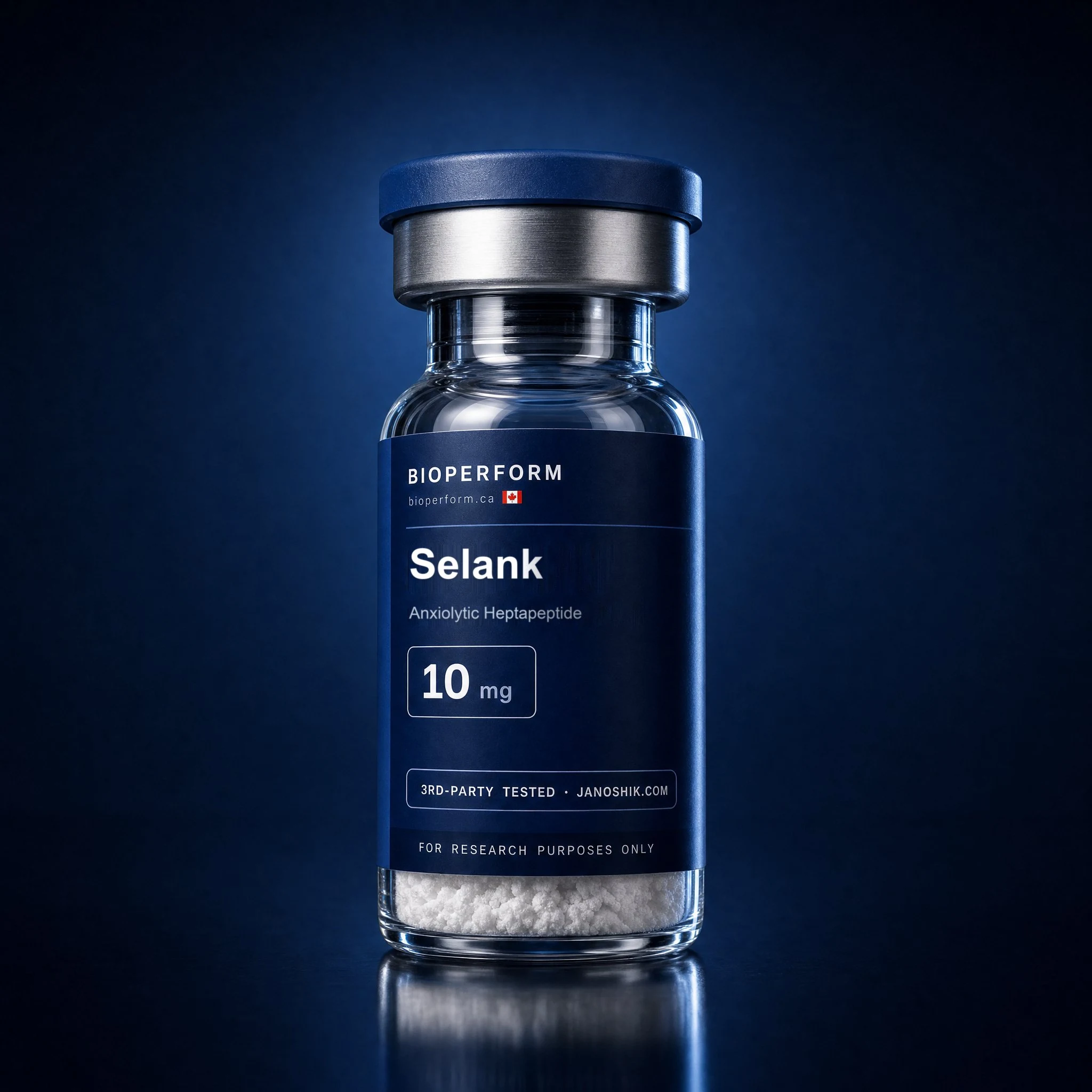
Selank 10mg: Advanced Peptide
CAD$69.99
FOR RESEARCH PURPOSES ONLY
This product is intended for laboratory and research use only. Not for human consumption or veterinary use.
31 in stock
HOW ORDERING WORKS
Choose your payment method at checkout: credit card or Interac e-Transfer.
Pay instantly by card, or send an e-Transfer to support@bioperform.ca and save 3%.
Orders before 2PM MST ship same day. Tracking number included.
Email support@bioperform.ca. Always a real response.
Description
Explore the Potential of Selank 10mg in Modern Neuroscience Research
Selank 10mg is a synthetic Tuftsin analogue widely studied in neuroscience and neurochemical research. Known for its unique interaction with multiple neurological pathways, this selank peptide has become a valuable tool for researchers investigating GABAergic signaling, neurotransmitter modulation, neuroplasticity, and neuroimmune communication.
Unlike traditional anxiolytic compounds, Selank demonstrates a distinct receptor profile that has made it particularly interesting for comparative studies involving anxiety-related pathways. Researchers seeking a high-quality Selank research compound often choose Selank for its versatility across several areas of neurological investigation.
Key Research Highlights
- GABAergic pathway research
- Neuroplasticity and BDNF studies
- Serotonin and dopamine pathway modulation
- Neuroimmune signaling research
- Frequently studied alongside Semax
Research Applications of Selank 10mg
Selank is commonly used in studies exploring how neurotransmitter systems influence behavior, cognition, and stress-related neurological responses. Preclinical research has investigated its activity at GABA receptor binding sites, making it a valuable compound for examining anxiolytic pathways that differ from benzodiazepine-class compounds.
Researchers have also studied Selank for its potential involvement in neuroplasticity mechanisms. Particular interest has focused on its relationship with Brain-Derived Neurotrophic Factor (BDNF) and synaptic plasticity pathways, both of which play important roles in learning, memory, and neuronal adaptation.
In addition to GABAergic activity, Selank has been investigated for effects on serotonin and dopamine signaling pathways. These neurotransmitter systems remain central to many neuroscience studies involving mood regulation, cognitive processes, and behavioral responses.
As a Tuftsin analogue, Selank has also attracted attention in neuroimmune research. Scientists continue to explore its role in innate immune signaling and the connection between immune function and neurological activity.
Selank vs Semax
One of the most frequently researched comparisons is Selank vs Semax. While both peptides are commonly used in neuroscience studies, their primary research focuses differ. Selank is often investigated for anxiolytic and neurotransmitter-related mechanisms, whereas Semax is generally studied for cognitive, neuroprotective, and neurotrophic pathways.
Because these research areas complement one another, both compounds are frequently included in broader neurological and cognitive research programs.
Why Researchers Choose Selank
Researchers looking to buy Selank Canada or source a reliable Selank 10mg product value its diverse research applications and well-established presence within peptide research communities. Its unique receptor activity and broad neurological relevance make it a useful tool for studying neurotransmitter regulation, neuroplasticity, and anxiety-related signaling pathways.
Frequently Asked Questions
What is Selank 10mg used for in research?
Selank 10mg is studied in neuroscience research involving GABAergic signaling, neurotransmitter modulation, neuroplasticity, and anxiety-related pathways.
How does Selank differ from Semax?
Selank is primarily researched for anxiolytic and neurotransmitter-related activity, while Semax is more commonly studied for cognitive and neuroprotective mechanisms.
Is Selank 10mg approved for human use?
No. Selank 10mg is intended for research purposes only and is not approved for human consumption or therapeutic use.
Research Disclaimer
For research purposes only. Not for human consumption. This product is intended exclusively for qualified researchers and licensed laboratory professionals. Selank 10mg has not been evaluated or approved by Health Canada for human use.
Order Selank 10mg Today
If you’re searching for a premium-quality selank peptide, selank 10mg, or selank for sale for legitimate laboratory research, Selank offers a valuable tool for exploring GABAergic signaling, neuroplasticity, neurotransmitter modulation, and neuroimmune pathways.
Reviews (2)
2 reviews for Selank 10mg: Advanced Peptide
Only logged in customers who have purchased this product may leave a review.
Related products



This has helped me with rumination. I still get worried about things but my brain doesn’t loop on the same thought over and over all day long like it used to.
Started using this mainly for stress and it’s been surprisingly helpful. I don’t feel sedated at all, just calmer and less reactive to little things that used to set me off.